Successful Management of Metastatic Papillary Thyroid Carcinoma and Subsequent Motherhood

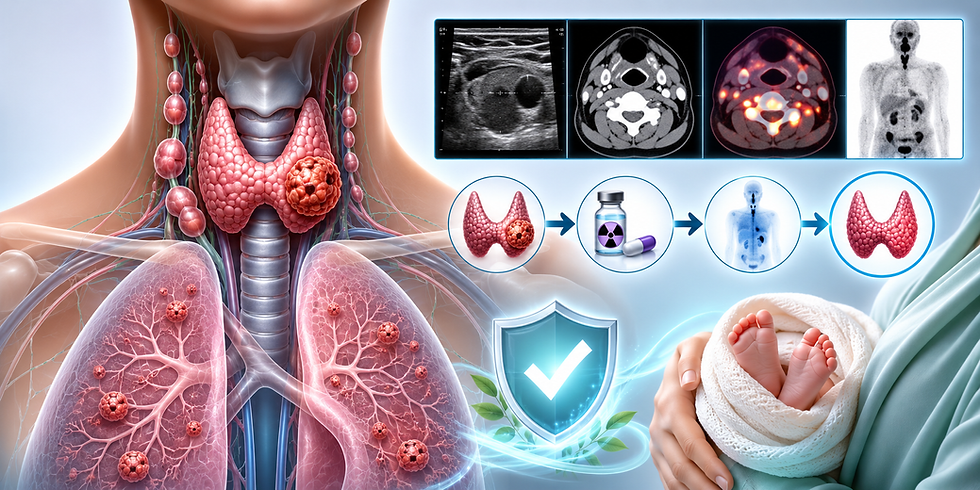
Disease Overview: Papillary Carcinoma of the Thyroid
Papillary thyroid carcinoma is the most common type of thyroid cancer. It typically progresses slowly and is highly treatable, even when it has spread beyond the thyroid gland. It frequently metastasizes (spreads) to the local lymph nodes in the neck. Distant metastasis, most commonly to the lungs or bones, is less frequent but remains manageable with advanced therapies. The standard of care usually involves surgical removal of the thyroid gland (thyroidectomy) and affected lymph nodes, often followed by targeted radioactive iodine (RAI) therapy. RAI therapy specifically targets and destroys any remaining thyroid tissue or metastatic cancer cells in the body, making it a highly effective treatment for advanced cases.
Patient Presentation
A 22-year-old female patient from Muzaffarpur presented with a diagnosis of papillary carcinoma of the thyroid. The disease was advanced at the time of presentation; she had significant metastasis to the neck lymph nodes as well as distant metastasis to her lungs.
Surgical Intervention and Adjuvant Therapy
To address the extensive spread of the disease, the surgical team performed a total thyroidectomy coupled with a comprehensive lymph node dissection to remove the cancerous tissues from her neck. Following her recovery from the surgery, the patient underwent aggressive adjuvant treatment to target the lung metastases. She received high-dose radioiodine therapy, requiring a total of three sessions to effectively treat the remaining cancer.
Post-Operative Recovery and Quality of Life
Despite the aggressive nature of the initial disease and the extensive treatments required, the patient responded exceptionally well. Following the completion of her radioiodine therapies, she remained completely disease-free for a period of three to four years. During this period of stable health, the patient and her family consulted the medical team to seek medical clearance and permission for her to get married, which she subsequently did.
Long-Term Follow-up and Obstetric Success
The patient has continued to thrive post-treatment. She successfully navigated pregnancy and had a child. Currently, at approximately five years post-surgery, she continues to live a completely disease-free and fulfilling life.


Comments